
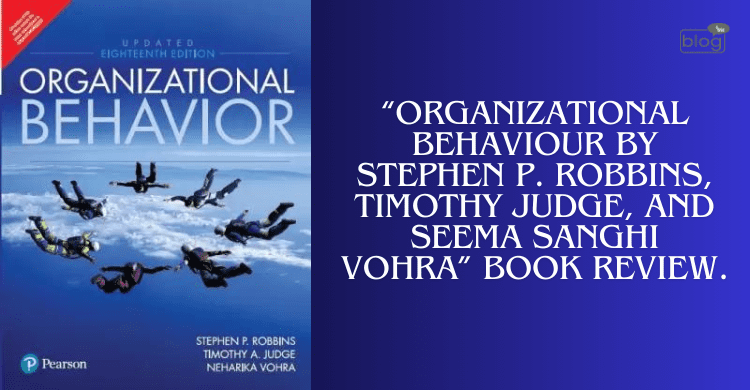
“Organizational Behavior” by Stephen P. Robbins, Timothy Judge, and Seema Sanghi Vohra is a classic textbook that represents the world of organizational behavior and delivers a clear concept of the environment of an organization. It comprehensively covers real-world illustrations, and engaging writing style, which is a premium resource for students, professionals, and anyone interested in the dynamics of organizations.
The book contains logical and systematic content which is easy for understanding to all aspects of learners.
In this book, readers will have a clearance of organizational behavior, including individual behavior, group and team analytics, leadership, time management, behavioral biases, culture, etc.
The authors have taken a systematic approach, gradually building up concepts and theories, ensuring that learners or people develop a strong foundation in the subject.
One of the book’s notable strengths is its objectification of real-world case studies and examples. The authors have included various cases from different sectors, which helps readers relate theoretical stereotypes to practical scenarios.
By doing so, the book fosters a deeper understanding of how the principles of organizational behavior apply to the real business world. This practical exposure is particularly precious for scholars who are preparing for careers in management and human resources.
Here the author’s writing style is engaging and accessible, which has made the complex subject matter more digestible for learners. The book is highly informative with illustrations, diagrams, and charts that aid in the appreciation of crucial concepts, which has created more engaging and visually stimulating reading for people.
A notable attribution of this book is the addition of “MyManagementLab” access, an online platform that complements the text. This platform offers a variety of resources, including self-assessment quizzes, interactive simulations, and additional case studies, which enhance the learning experience.
In addition to covering traditional content, the book also explores contemporary issues in organizational actions. It delves into topics such as diversity and inclusion, ethics, and the impact of technology on the workplace. This ensures that the content remains applicable in today’s dynamic business surroundings, where organizations are constantly evolving and facing new challenges.
In this book, one can easily do one’s personality test. One can have a clear concept of his personality and values. Here the author also mentioned some dark traits of human nature such as Machiavellism, Narcissism, and Self-Monitoring.
While “Organizational Behavior” has multiple virtues, it isn’t without its limitations. The sheer volume of content can be overwhelming for some audiences, and the level of detail may not be suitable for those seeking a brief overview of the subject.
Besides, some sections may appear repetitive as they redefine and expand upon certain concepts throughout the book.
Again, “Organizational Behavior” by Robbins, Judge, and Vohra is an invaluable resource for anyone seeking a comprehensive understanding of the subject. Its systematic approach, real-world illustrations, engaging writing style, and online resources make it an important tool for scholars and professionals.
The book’s applicability in addressing contemporary issues in organizational behavior ensures that it remains a vital reference in the field. While it may be a weighty book for some, its depth and breadth of content make it a necessary companion for those interested in the dynamics of organizations and human behavior within them.
Anyone can find the PDF of this amazing book on this site: https://shorturl.at/ehvZ7
For more content, Click Here.
Writer
Shihab Shahriar Sporsho
Intern, Content Writing Department
YSSE