
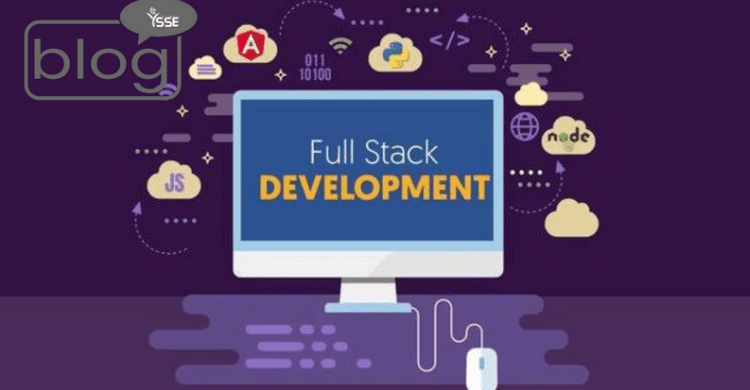
To become a full-stack developer, you need to learn about two key aspects of web development: the front end and the back end.
The front end, also known as the client side or what users see and use, includes all the parts of a computer program that users directly interact with.
Back-end developers ensure the website performs correctly, focusing on databases, back-end logic, application programming interface (APIs), architecture, and servers.
If you want to become a full-stake developer, here are some fundamental skills and easy ways to get started. So, Let’s explore these skills and information.
11 step-guide we can follow
1. Complete a Course
To embark on a successful journey as a full-stack developer, it is recommended to enroll in a software engineering preparatory program. Irrespective of your coding proficiency, you can acquire the basic principles in merely 4-6 weeks. Additionally, a quality preparatory course provides students with access to industry professionals who can offer invaluable guidance during the job search process, giving you a competitive edge.
2. Obtain the Requisite Education
Although a strong education is essential for establishing your career in full-stack development, there are numerous routes you can pursue. Here are a few examples.
Foundational Knowledge
Having some foundational knowledge of full-stack development is a wise move before embarking on a degree or online program. This entails possessing basic computer skills, familiarity with fundamental design principles, and a novice comprehension of HTML and CSS.
University Degree or Formal Education
While a college degree is not a requirement for becoming a full-stack developer, it remains one of the most conventional career paths.
Bootcamp
Bootcamps, like Springboard’s Software Engineering Bootcamp, can get you read for a full-stack development job faster and for less money compared to going to a regular university. Some Bootcamps, including Springboard, promise to give your money back if you can’t find a full-stack development job soon after you finish the program.
Self-Taught Approach
The self-taught approach is perhaps the most challenging route and is not suitable for everyone. You will need to plan extensively, unlike the bootcamp or university route. While there are numerous full-stack development videos available on YouTube. GitHub is an excellent platform for this purpose.
3. Master the Essential Programming Languages and Tools
Let’s take a look at the programming languages and tools you will need to master :
Programming Languages
In addition to programming languages, it is essential to have a good grasp of the following tools :
# Text editors such as Atom and Visual Studio Code.
# Terminals or consoles to execute your code and commands.
# Database storage for the websites or mobile applications you intend to create.
# GitHub.
4. Develop Your Skill Set
Your education is just the beginning of honing your full-stack developer skills. Here’s what you’ll need to continue learning.
Technical skills, Soft skills which included Communication, problem solving and much more.
Adaptability and also Project management skills are essential as a full-stack Developer.
5. Pursue Volunteer, Open-Source, or Freelance Work and Participate in Coding Challenges To Build Your Portfolio
Having a full-stack developer portfolio serves as evidence of your skills. You can start by offering your services to local businesses and creating their websites or apps for free. You may also take on small freelance projects and watch out for coding challenges on websites like Hackathon and HackerEarth.
6. Create a GitHub Profile
A GitHub profile is an excellent way to display your portfolio. You can also network with other developers and collaborate with them. Through GitHub, you can easily share code files and keep track of different versions for each project.
7. Your Network Is Key
Your network can be a shortcut to landing internships and jobs. Here are some ways to build that :
Online communities
Conferences and in-person meet-ups.
8. Pursue a Full-Stack Development Internship
After acquiring a portfolio and receiving some education, you can initiate the process of applying for internships, which will enable you to implement your acquired knowledge.
9. Find a mentor
Mentors can prove to be an invaluable asset, but discovering one can be challenging. Instead of actively seeking out a stranger, it’s best to allow this type of connection to evolve naturally over time, and an internship is an excellent opportunity for this to occur.
10.Ensure Your Resume Is Up-to-Date and Start Applying for Jobs
Once you have gained experience through internships or a portfolio, you can start applying for jobs. Be sure to tailor your resume for each position to demonstrate your thorough consideration of the role. Avoid applying randomly.
11. Do Coding Exercises Daily
During the interview process, expect to complete a coding exercise lasting around 30-40 minutes. Practicing coding daily while job hunting can solidify your knowledge and reduce nervousness.
By pursuing full stack development, you can venture into the forefront of technology and collaborate with innovative companies to devise new and unique solutions. Additionally, the industry’s exponential growth provides ample career opportunities and job stability for proficient programmers who aspire to establish themselves in the programming sphere.
To read more blogs , click here.
Writer,
Tabassum Akter Taba
Intern at Content Writing Department
YSSE