
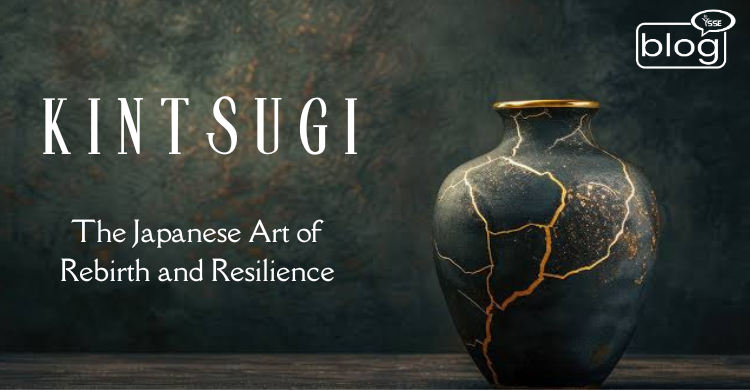
An idea that highlights the beauty in imperfection comes from Japanese philosophy, specifically the Zen Buddhist approach to ceramics. Over time, Zen Masters came to believe that broken bowls, cups, and pots shouldn’t be thrown away or neglected. They should continue to elicit our respect and attention, as well as be mended with great care. Reconciliation with the imperfections and mishaps of time is symbolized by this procedure. The poetic translation of the ceramic repair tradition known as kintsugi is “golden joinery” (kin means “golden” and tsugi means “joinery”).
Kintsugi is a centuries-old Japanese technique for making shattered ceramics. The method uses a unique tree-sap lacquer coated with luxurious powdered gold, silver, or platinum to repair ceramic items instead of using a covert adhesive. Once finished, each repaired object is pleasantly unique, with lovely seams of gold shining in the conspicuous cracks of the ceramics. By accentuating the cracks and breaks of each relic, rather than covering or concealing them, this novel technique honors the distinct history of each piece. In fact, kintsugi frequently makes the restored objects more beautiful than the original, revitalizing them with a new appearance and giving them a second life.
Origin of Kintsugi
Kintsugi is said to have its roots in the Muramachi era. The craft is said to have started in the late 15th century when Ashikaga Yoshimasa, the Shogun of Japan, sent a broken Chinese tea bowl back to China for restoration. Ashikaga Yoshimasa was devastated to learn that repulsive metal staples had been used to fix it. This inspired Japanese artisans to develop an alternative, aesthetically beautiful method of restoration, and kintsugi was conceived.
Collectors grew so captivated with the new art that some were suspected of purposely breaking priceless pottery so it could be fixed with the gold seams of kintsugi. These repaired ceramics could then be sold for huge profits. It is also possible that pottery objects with flaws developed during production were intentionally broken and repaired using kintsugi rather than being discarded.
The Philosophy Behind Kintsugi
Kintsugi is a part of the Zen concept of wabi-sabi, which values modesty, simplicity, and the beauty of aging, particularly when it has a weathered or rustic appearance. The Japanese philosophy of mushin (no mind), which incorporates ideas like acceptance of change, non-attachment, and the certainty of fate as aspects of human existence, is also connected to it.
Kintsugi is a Japanese mending technique that involves change as well as repair. In addition to allowing damaged items to be repaired, it also displays the damage’s scars. Kintsugi welcomes change rather than concealing the reality that something is broken. This is important because it produces something that we can all relate to. We all experience falls in life, but we rise again. When we demand that everything and everyone, including ourselves, be flawless, we miss out on much of what is truly beautiful. This mindset creates a harsh world where resources are wasted, people’s excellent traits are overshadowed by their imperfections, and our standards become impossibly restrictive and unhealthy.
Things may fall apart—that is life—but we are resilient. We can make use of every fragment, mend our wounds, and carry on. That is the core of persistence, flexibility, and resourcefulness. Instead of making us long for something more, different, or better, the kintsugi method highlights the beauty of who we are and all of our flaws. After all, our cracks are what give us character and let us shine.
To read more blogs, click here
Writer
Ferdous Ara Rimi
Intern
Content Writing Department
YSSE.