
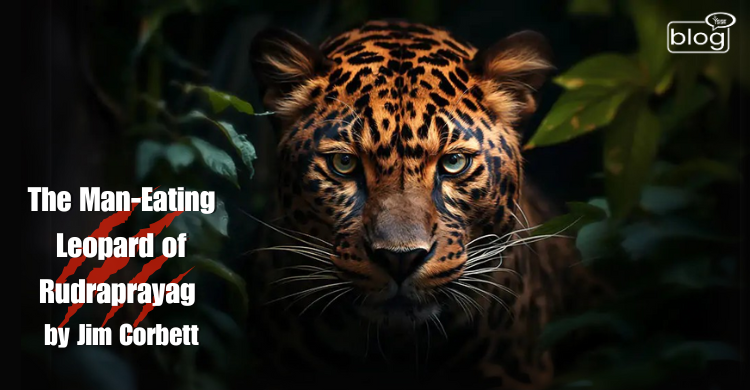
When I first picked up The Man-Eating Leopard of Rudraprayag by Jim Corbett, I thought it was about the lives of a common hunter and leopard. However, I was struck by the complexity of human-wildlife relationships. Since the name Jim Corbett is synonymous with man-eating animals, it’s not just a thrilling retelling of the hunt; He takes the reader deep into the heart of the forest and the hearts of its inhabitants.
A leopard with a story
The term “human-eaten leopard” conjures up images of merciless predators who kill defenseless humans.
However, Corbett challenges this view from the outset. Instead of just talking about the attacks, he tries to understand the deeper meanings behind them. He explores the leopard’s backstory, showing that it is not just a cruel creature but an animal driven by need. Factors such as injuries, struggles to survive, and environmental changes affected his behavior. Corbett insists that the animal was not inherently evil but was caught in a situation that left it with few options.
I found this perspective refreshing, as it doesn’t just paint the animal as a villain. Instead, Corbett offers a kind of sympathy for the creature, acknowledging the fine line between survival and destruction. It made me think about how often we view the wild with a sense of fear, forgetting that animals are simply reacting to the changes we impose on their environment.
The Villagers’ Fear and Courage
Corbett portrays the villagers of Garhwal who find themselves vulnerable to the leopard’s threat. Fear—an omnipresent fear, infiltrating their thoughts and influencing their actions—permeated their daily existence. The villagers fear leaving their homes, feel anxious about sleeping, and are even hesitant to venture into their fields. The persistent threat of the leopard casts a long shadow, and Corbett adeptly illustrates how this fear dominates their lives. Nevertheless, there is also an underlying resilience among them. Even amidst such dread, they persist in their daily routines and responsibilities. This quiet fortitude is a strength they may not even be fully aware of.
What I appreciated most was Corbett’s respect for the villagers. They aren’t portrayed as helpless victims. They fight back in their ways—some with weapons, others by organizing night watches. Corbett sees them as resilient people, doing what they can to protect their own. It wasn’t just a passive fear—they were living through it and doing their best to survive.
The Man Who Kills, But With Respect
Corbett himself is no ordinary hunter. Reading his account, you quickly realize that he’s not chasing after the leopard for sport. There’s no glorification of the hunt. Corbett seems almost reluctant to kill the leopard. His approach doesn’t have the usual pride you might expect from a hunter; rather, it’s full of contemplation. He knows constantly that what he’s doing is necessary, but it’s never something he enjoys.
One of the most profoundly human elements of the book is Corbett’s inner conflict. He articulates his moral dilemma—while he is tasked with protecting the villagers, he simultaneously holds a deep respect for the animal he is pursuing. This creates a challenging balance, and Corbett conveys his internal struggle in a manner that resonates with readers, even those who do not have experience in hunting. His hesitation and the gravity of the responsibility he bears are palpable, rendering his eventual success a bittersweet rather than purely triumphant experience.
The Writing: Simple, Yet Profound
Corbett’s prose is direct and unembellished, which enhances its effectiveness. There are no superfluous details. The language remains uncomplicated, serving its purpose well. As a reader, I found myself immersed in his narrative through his succinct descriptions and candid authenticity. The pacing was consistent, with a continuous thread of tension that kept me engaged, particularly during the moments when he pursued the leopard through the dense jungle.
What particularly resonated with me was Corbett’s measured approach. He did not hasten through the narrative; rather, he dedicated time to contemplate his reflections, the scenery, and the wildlife. The hunt transcended mere activity—it was an emotionally charged experience, imbued with profound meaning.
The Man-Eating Leopard of Rudraprayag is not merely a narrative about pursuit; it is an exploration of existence in its most fundamental essence. This tale delves into the intricacies of nature, the challenging decisions we are often compelled to confront, and how fear and the survival instinct can profoundly influence human experiences.
To read more blogs like this click here.
Writer
Fardeen Bin Abdullah
Intern,
Content Writing Department
YSSE.