
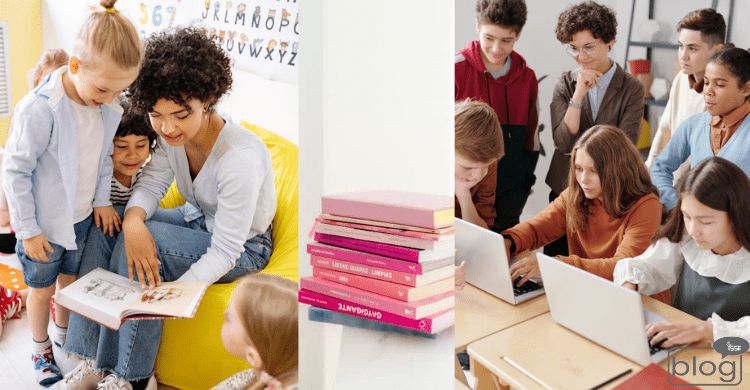
Education has welcomed technology’s presence in the classroom, which is not surprising given how it continues to revolutionize every part of our lives. But the question still stands: Is it possible for technology and conventional teaching approaches to get along?
We will discuss the advantages of combining traditional instruction with technology in this blog article, as well as how this hybrid method can improve students’ learning outcomes.
1. Engaging and Interactive Learning:
Technology’s potential to make learning more dynamic and engaging is one of the main benefits of using it in the classroom. Passive learning, in which students listen and take notes, is a common focus of traditional teaching approaches. Teachers can actively engage students in the learning process by introducing multimedia resources, instructional apps, and online platforms through technology integration. Learning becomes more engaging and remembered as a result of the more dynamic and participative atmosphere this creates.
2. Personalized Learning:
Each learner possesses distinct learning styles, aptitudes, and limitations. Personalized learning experiences that meet the needs of each individual are made possible by technology. Students can obtain educational content catered to their individual learning methods, pace, and interests with the use of internet tools. With the use of adaptive learning platforms and software, students can monitor their progress and work on areas that need development because they can receive quick feedback. Academic performance is improved and student engagement is increased with this customized strategy.
3. Access to a Wealth of Information:
Our access to information has been completely transformed by the internet. Conventional teaching approaches rely on the few resources accessible in the classroom and textbooks. On the other hand, kids who integrate technology have access to a wealth of digital libraries, educational websites, and online resources. This gives them the opportunity to investigate different viewpoints, carry out research, and broaden their knowledge outside of the classroom. The wealth of knowledge also promotes information literacy, digital citizenship, and critical thinking.
4. Collaboration and Communication:
Technology helps teachers and students work together by removing time and distance constraints. Students may collaborate and communicate more easily using online discussion boards, online platforms, and virtual classrooms. They can work on projects together, exchange ideas, and have insightful conversations. Their social and communication skills are improved, and it also gets them ready for the digital workplace, where productive teamwork is highly regarded.
5. Bridging the Gap between School and Real World:
The use of technology in the classroom helps close the gap between abstract concepts and practical implementations. Through the use of interactive teaching tools, virtual field trips, and simulations, students can have firsthand experience with the concepts they study in the classroom. This hands-on method develops students’ creativity, critical thinking, and problem-solving abilities while preparing them for the obstacles they will face in the workplace.
There are numerous advantages to integrating technology into traditional education for both teachers and students. Teachers may personalize education, create dynamic and interesting learning environments, facilitate collaboration, give students access to a multitude of material, and close the knowledge gap between theory and practical applications by utilizing technology. To create a comprehensive and successful learning experience, it is important to strike the correct balance between technology and conventional teaching approaches.
To read more contents like this click here.
Writer :
Jarin Anan Tanha
Intern,
Content Writing Department,
YSSE