
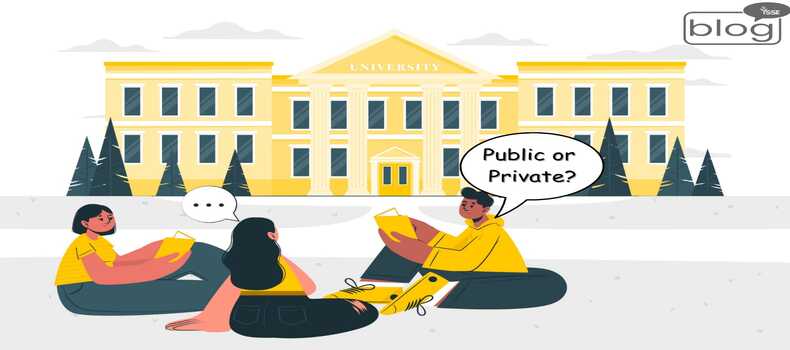
After HSC, when students go for tertiary education a main question always revolves around their minds; that is, public or private, which university will be the best option?
Amidst all the suggestions from our relatives and other societal pressures, students feel overwhelmed while taking the decision to where to pursue undergraduate degree. That is why it is important to understand the differences and make a well informed decision for a better future.
Let us point out the differences and similarities between public and private universities so that HSC passed students can understand and analyze how and where they want to spend their future four years in.
Tuition Fees
Public and private universities in Bangladesh present distinct contrasts in various aspects, each catering to the diverse needs and preferences of students. One of the most prominent disparities between these two categories of institutions is the tuition fees. In public universities, the cost of education is considerably lower compared to their private counterparts. This affordability factor makes public universities an attractive option for many students and their families.
Residential Facilities
Another significant difference lies in the availability of residential facilities. Public universities typically offer a more extensive range of accommodation options. These institutions often have on-campus hostels and dormitories, providing a convenient and cost-effective housing solution for students. In contrast, private universities may have limited on-campus housing, making it necessary for students to seek off-campus accommodations, which can be more expensive and less convenient.
Quality of Education
In recent years, the quality of education provided by both public and private universities in Bangladesh has seen substantial improvements. Gone are the days when the private sector lagged significantly behind in terms of educational standards. Today, both categories of universities are committed to ensuring high-quality education and are often on par with each other in terms of academic excellence. This shift has made the choice between public and private institutions more about individual preferences and program offerings rather than perceived differences in educational quality.
Admission Process
One of the distinct features of public universities in Bangladesh is the standardized and rigorous admission process. These institutions typically conduct admission tests that are highly competitive and challenging. This process aims to select the best and brightest students based on their academic performance and aptitude for their chosen programs. On the other hand, private universities may have varying admission criteria, which can include interviews or additional tests, depending on the institution and program.
Class sizes
Private universities in Bangladesh often boast smaller class sizes, which can lead to a more personalized learning experience. This lower student-to-faculty ratio allows for better interaction between professors and students, facilitating a deeper understanding of course materials. Additionally, private universities tend to invest more in technical support and infrastructure, ensuring that students have access to modern facilities and resources to enhance their learning.
Conclusion
In conclusion, while public and private universities in Bangladesh have notable differences, these distinctions are increasingly narrowing. Tuition fees, residential facilities, and admission processes continue to set these institutions apart, but the overall quality of education and opportunities for students are becoming more balanced. Ultimately, the choice between public and private universities should be based on individual priorities, career goals, and financial considerations, as both sectors now offer valuable educational experiences.
Click here to read more blogs.
Writer,
Fatema Tuz Zohora
Intern, Content Writing Department
YSSE.