
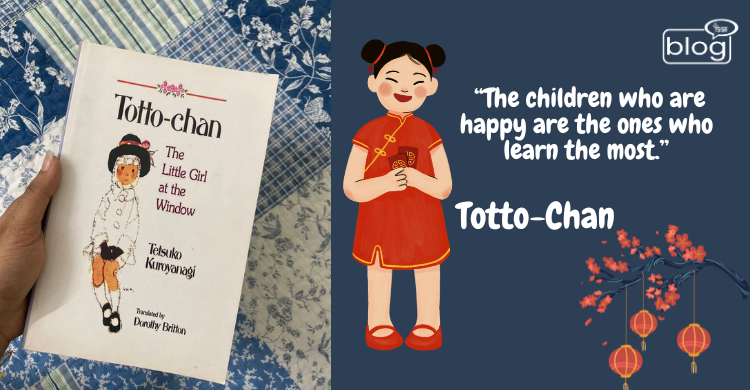
Tetsuko Kuroyanagi wrote this amazing small book called Totto-chan. It is a novel full of pleasant memories and purity.
Anyone reading this book will feel as if someone has hung a hanger on their face, and they will smile constantly. The best turning point of this book is that Totto-Chan is the writer herself.
Totto-chan’s Journey to Tomoe Gakuen
Totto-chan, the Little Girl at the Window, is Tetsuko Kuroyanagi’s memoir, Totto-chan: The Little Girl at the Window, tells the heartwarming story of her childhood in Japan during World War II. Totto-chan, a curious and lively girl, is expelled from her first school for her quirky behavior. Her mother, recognizing the need for a supportive environment, enrolls her in Tomoe Gakuen, a unique school led by the kind and visionary headmaster Sosaku Kobayashi. At Tomoe, set in old train cars, Totto-chan’s individuality is celebrated, allowing her to thrive.
A New Approach to Education
The school’s curriculum is unlike any other. Students are free to choose the order of their courses, which encourages independence and curiosity. Outdoor sports, music, farming, and cooking are all part of their curriculum, instilling a sense of delight and practical knowledge. The headmaster’s techniques value innovation, personal growth, and holistic development above strict conformity. Kobayashi’s approach is deeply inclusive and empathetic. He welcomes children with disabilities and treats them as equals, teaching all students the value of cooperation and respect. Totto-chan becomes close friends with a boy with polio and another who was raised in America and struggles with the Japanese.
Impact of War
Despite societal and governmental restrictions during wartime, Kobayashi encouraged students to learn from one another, even promoting the study of English, which was seen as controversial due to Japan’s war against English-speaking countries. The story beautifully illustrates Tomoe Gakuen’s dynamic and joyous culture, in which youngsters are free to pursue their hobbies and form solid friendships. Totto-chan’s days are full of fun, discovery, and deep teachings. The headmaster’s care and dedication provide a haven for the children, sheltering them from the harsh realities of war for as long as possible.
However, as the conflict progresses, its effects begin to permeate their idyllic existence. Totto-chan notes subtle changes, such as the lack of her favorite caramel candy and her mother’s growing difficulties in providing balanced lunches. The brutality of wartime is also depicted in scenes such as a boy being withdrawn from school by his parents, leaving both the child and the headmaster in tears. A tragedy occurs when Tomoe Gakuen is destroyed in an air raid. Totto-chan’s valued time at the school is cut short when it is never rebuilt.
Hope and Inspiration
Despite the loss, Kobayashi offers hope for future improvements to the institution, leaving readers with a sense of perseverance and optimism. The conclusion reveals that Kobayashi had contacts with key persons in government, allowing him to construct such a progressive institution despite the limits of the time. Totto-chan was very impressed by his new educational concepts and deep awareness of children’s needs, which continue to inspire readers all over the world.
To read more blogs, click here.
Writer
Sadia Noor Orpita
Intern of Content Writing Department
YSSE