
Most of us must vividly remember the 21st December of 2012. The world became so chaotic with one concern if the apocalypse will take place. This idea of apocalypse on this specific date was connected to the calendar of Maya civilization. Now what is this Maya civilization and why did the world go so crazy for their prediction from hundreds of years ago?
One of the most captivating mysteries in mankind is the Maya civilization. It expanded for thousands of years. They have created amazing artwork, precise calendars and majestic cities. However, it unexpectedly vanished. Because of this, archaeologists, historians, and curious souls are wondering what actually happened to the Maya.
What are now Mexico, Guatemala, Brazil, Honduras, and El Salvador were home to the Maya people. They constructed pyramids with such accuracy that they perfectly matched astronomical phenomena. They were far ahead of their time in their understanding of mathematics and astronomy. They even predicted many future phenomena. Historians are still trying to figure out the complex symbols that the Maya used to create their writing system. How the Maya disappeared is one of the most important mysteries at present. Many of the Mayans had abandoned their developed cities by the ninth century. This absence was mysterious and raised many questions. This phenomenon is called by experts as the “Maya collapse.” This mysterious disappearance is the subject of several theories. One theory is that drought was a significant factor. Rainwater was essential to the Mayans’ agriculture and drinking. People might have been forced to abandon their cities if long-term drought had prevented them from growing food. Evidence of severe droughts during this period has been discovered from studies.
Overpopulation is the subject of another theory. The Maya civilization expanded very quickly so it’s possible that their agricultural methods weren’t sustainable. In order to produce food, they cut forests. It may have caused soil erosion. Food shortages could have led to migration.
Warfare and conflict may also have played a role. Defensive walls, destroyed structures, and signs of battle have all been discovered by archaeologists. Rival cities tend to be in conflict over resources and authority. Long-lasting conflicts might have damaged society.
The Maya had a strong belief in their myths. They believed that time repeats itself in cycles. They also believed that the universe is cyclical. Their renowned Long Count calendar predicted the end of the world in 2012 which created a worldwide panic that was actually a close of a cycle and the start of a new cycle.
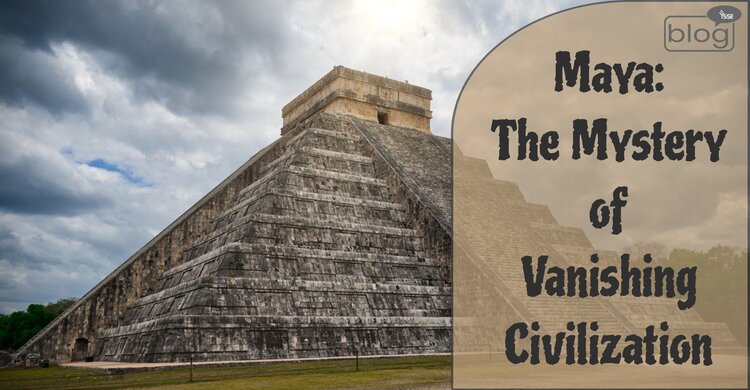
There are several Maya myths that are really fascinating. According to one thought, the Maya escaped to a secret city guarded by spirits in order to avoid attackers. Some people think that aliens were the source of the Maya’s knowledge of the stars. Although these concepts attract people’s attention, there is no scientific proof for them. The Maya’s amazing creations are just as mysterious. Their pyramid El Castillo is an engineering wonder. A shadow that resembles a snake sliding down occurs on the stairs of the pyramid at the spring and fall equinoxes. This phenomenon reflects their thorough understanding of astronomy.
Even the ancient Greeks were unaware of the idea of zero which was also created by the Maya.
The Mayans had some creepy cultures which included human sacrifice, bloodletting rituals, the ball game called pok-ta-pok, etc.
It’s necessary to keep in mind that the Maya’s story didn’t stop, even after their mysterious disappearance from their cities. The Maya people continue to speak their language, and maintain their culture and traditional practices.
The legacy of Maya includes science, myth, and reality. It acts like a reminder of how much we still don’t know about the past and its mysteries. We are still captivated and inspired by the Maya’s legacy. Their creativity still amazes us and leaves us in wonder about all the things that are still a mystery.
To read more blogs, click here.
Writer
Ummay Tasnim Sifat
Intern, Content Writing Department
YSSE